Freshwater pearls begin inside freshwater mussels. Their growth takes place within living tissue, long before a pearl is selected for a design or placed in a listing. The details of pearl cultivation vary by farm and method, but the material at the center of the story is the same: layers of nacre made by a mollusk.
What “cultured” means
A cultured pearl is a real pearl whose formation was started with human help. In many freshwater methods, a technician places a small piece of donor mantle tissue inside a mussel; some methods also use a bead nucleus. The mollusk then continues the process by depositing nacre around the introduced material. Methods differ, so a careful seller should avoid making broad claims about every pearl’s origin.
A natural pearl forms without that human introduction. “Cultured” does not mean imitation: imitation pearls are manufactured to look like pearls, while cultured pearls grow inside mollusks.
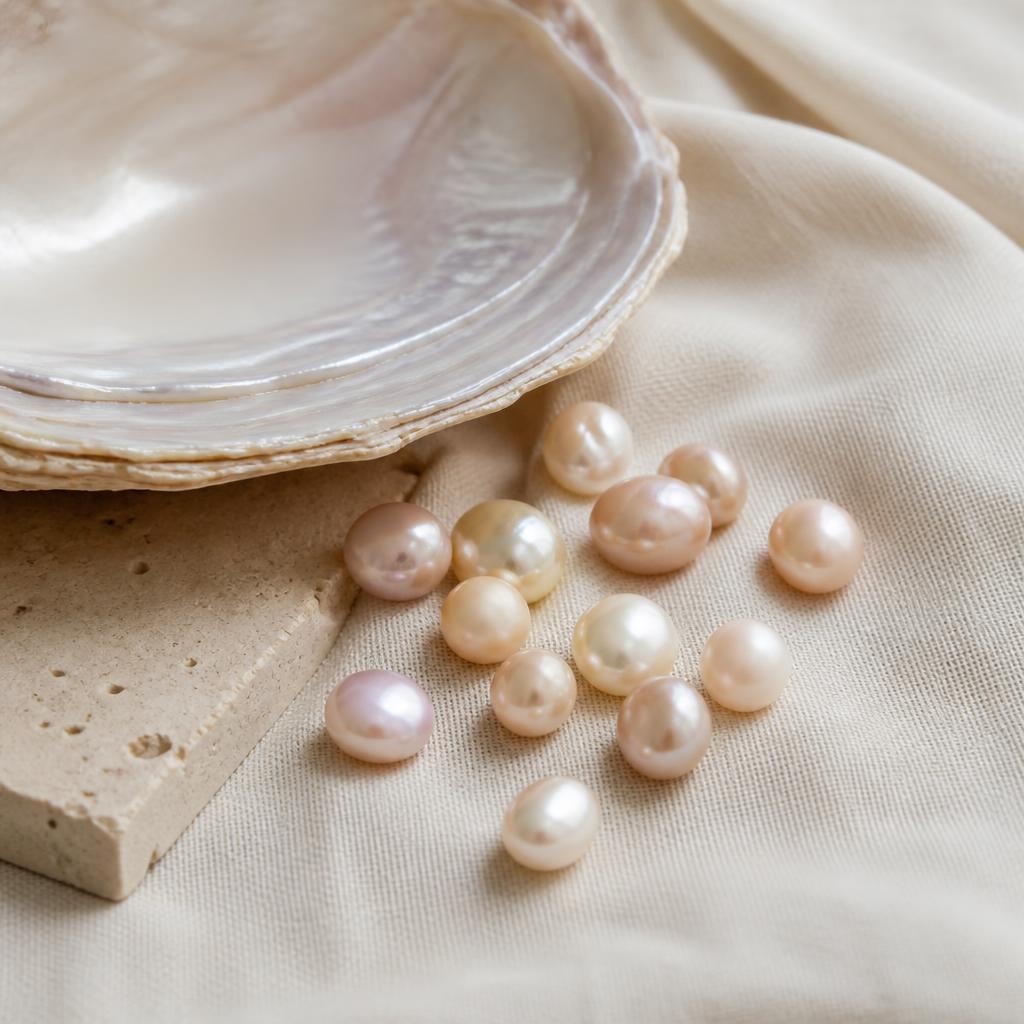
Where the glow comes from
Nacre is built in very thin layers. The way light meets and reflects from those layers gives a pearl its characteristic luster and depth. The surface can also show tiny lines, dimples, or changes in texture. Those details vary from pearl to pearl and are part of why close-up product photos and honest descriptions matter.
Luster, color, and shape are related to the pearl’s growth, but they are not interchangeable qualities. A pearl can have an irregular outline and still show a beautiful reflection; a rounder pearl is not automatically more luminous. The baroque shape guide explains that difference in more detail.
Why every pearl develops differently
A mollusk is not a machine, and its growing conditions are not identical from one pearl to the next. Position inside the animal, cultivation method, growing conditions, and the shape of the starting material can all influence the finished pearl. That is why a group can include different sizes, silhouettes, surface details, and overtones.
There is no need for a home “real or fake” test that rubs or scratches a pearl. Those tests can damage the surface. For a particular piece, check the seller’s description and ask about the pearl type, treatment, measurements, and materials if anything is unclear.
Quick distinction
Cultured describes a real pearl formed with human assistance. Imitation describes a manufactured lookalike. Ask for clear sourcing and treatment details rather than relying on one photo or a quick test.
If you want to see pieces currently offered by Maggie Made This, visit the freshwater pearl collection. Product pages show the specific available item; the loose pearls pictured in this article are editorial artwork, not inventory.